
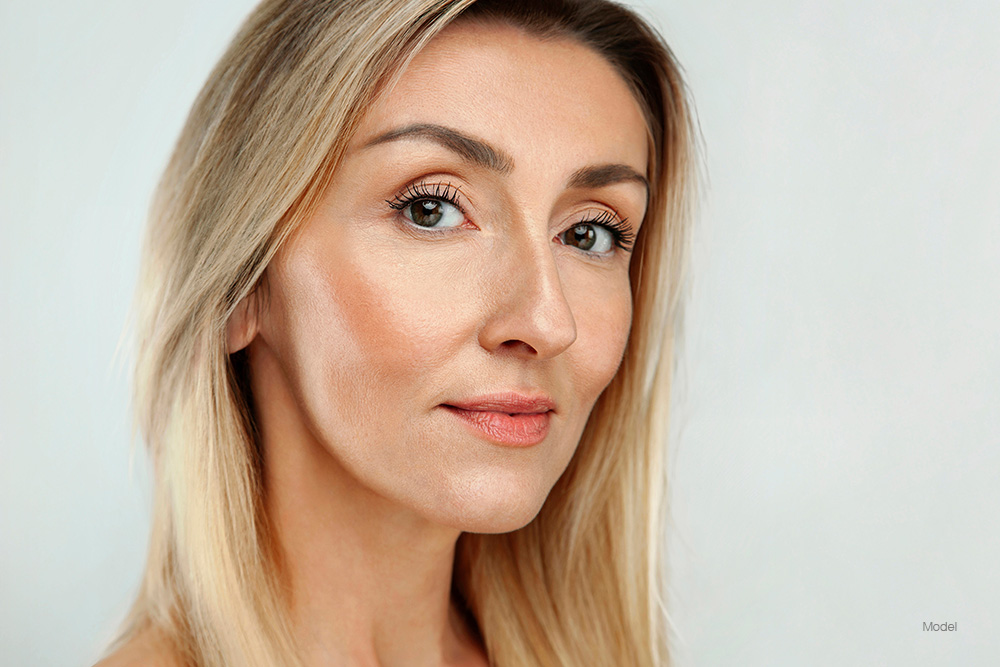
Ozempic face is the hollowed, prematurely aged appearance that can result from rapid weight loss with GLP-1 medications. With the right treatment approach, most patients can restore lost volume and skin quality.
If you’re taking semaglutide or another GLP-1 medication and have noticed your face looking drawn, deflated, or older than it did a year ago, you’re not imagining it. The term “Ozempic face” has become shorthand for a set of facial changes that appear during or after significant weight loss, and demand for an Ozempic face fix has grown considerably as these medications have entered the mainstream. Understanding what’s actually happening beneath the skin is the first step toward addressing it.
What Exactly Is “Ozempic Face”?
Ozempic face refers to a hollowed-out, gaunt, or prematurely aged appearance that develops when facial fat is lost quickly. The drug isn’t doing something toxic to your skin—the rapid weight loss it facilitates is.
The face holds fat in distinct compartments: the cheeks, temples, under-eyes, buccal region (between the cheekbones and jawline), and the subcutaneous layer just beneath the skin. When weight drops quickly, these areas deflate. The structural support that gives your face its shape—and its youthful fullness—diminishes faster than the skin can adapt to it.
The body draws from wherever it needs to, and the face is rarely spared.
The result is a combination of:
- Sunken temples, cheeks, and under-eye hollows
- Loose or sagging skin along the jawline
- More prominent lines, creases, and wrinkles
- An overall gaunt or deflated look
It’s also worth noting that Ozempic face isn’t unique to semaglutide users. The same changes occur with any method of rapid weight loss—strict caloric restriction, bariatric surgery, or other GLP-1 medications like tirzepatide. The speed of loss matters more than how it’s achieved.
Why Does It Happen?
Two factors work against you when weight loss is rapid: volume loss and skin laxity.
Facial fat is structural. It sits in precise layers and compartments that give the face its contours, and losing it quickly leaves skin without adequate support. Collagen and elastin—the proteins responsible for firmness and elasticity—take time to remodel. If weight loss is too rapid, the skin doesn’t have time to adjust. This can create loose or sagging skin on your face, making it appear deflated.
Age compounds the problem. Patients over 40 already experience natural collagen decline, so their skin has less reserve elasticity to fall back on. Thinner, less resilient skin shows the effects of rapid fat loss much more quickly than younger skin would.
How to Fix Ozempic Face
The good news is that semaglutide face changes are not permanent. A layered treatment approach—one that addresses both lost volume and skin quality—typically yields the most satisfying results. The right combination depends on the degree of change, your age, skin quality, and overall goals.
Restore Volume With Dermal Fillers
For many patients, dermal fillers are the most immediate and effective first step. Hyaluronic acid fillers—like JUVÉDERM® or Restyland®—placed strategically in the cheeks, temples, under-eye area, and along the jawline rebuild the structural scaffolding eroded by rapid weight loss. Results are visible right away, and most patients find that a thoughtfully planned treatment restores a natural, rested appearance rather than an overfilled one. Ozempic face fillers have become one of the most requested treatments in this category precisely because the hollowing tends to follow predictable anatomical patterns.
Tighten Skin With Ultrasound or Radiofrequency
Volume replacement alone doesn’t address loose or sagging skin. Ultrasound-based treatments like Ultherapy® work at deeper tissue layers to stimulate collagen production, gradually lifting and tightening skin over several months. Radiofrequency microneedling targets the dermal layer to improve firmness and reduce laxity—particularly useful along the jawline and lower face where sagging is often most visible.
Resurface and Improve Skin Quality
Loose skin after Ozempic® often comes with a change in texture and tone—more visible fine lines, crepiness, and an overall dullness that wasn’t there before. Non-surgical cosmetic treatments—like Morpheus8, Forma™, or microneedling—stimulate new collagen at the surface level, improving texture, reducing lines, and restoring a more even complexion. These are typically used alongside volume restoration rather than as a standalone fix. Additionally, the Alma Hybrid Laser, which uses a combination of ablative (fractionated CO2) and non-ablative lasers, is very good at addressing these concerns.
Consider Surgical Options When Appropriate
For patients with significant skin laxity—particularly those over 50 or those who have lost substantial weight—non-surgical treatments may not be sufficient on their own. A deep plane facelift or a facelift and neck lift can address excess skin and reposition soft tissue in ways that injectables and energy devices cannot. If you’re seeing significant jowling or neck laxity alongside midface hollowing, this is worth discussing in detail during a consultation.
Can You Prevent Ozempic Face?
Prevention is more feasible than most patients expect. Gradual weight loss gives skin more time to adapt, narrowing the gap between fat loss and skin remodeling. Resistance training preserves muscle mass, including the more than 20 facial muscles that contribute to overall facial structure. Adequate protein intake supports collagen synthesis. Consistent sun protection slows the collagen degradation that ultraviolet exposure accelerates.
None of these measures guarantees that facial changes won’t occur, but they can meaningfully reduce their severity—particularly for patients who start them early in their treatment course.
Ready to Discuss Your Options?
If you’re noticing facial changes after weight loss and want a personalized assessment, our team at Beverly Hills Plastic Surgery® is here to help. Led by board-certified plastic and reconstructive surgeon Dr. Gabriel Chiu, we’ll review your concerns, evaluate your skin quality and facial anatomy, and recommend a treatment plan designed around your specific goals.
To schedule a consultation, call (310) 888-8087 or complete our online consultation form.